
Children’s Literature Blog
Radiant Child
Javaka Steptoe
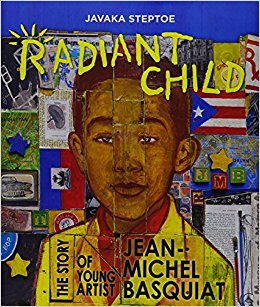
Steptoe, J. (2016). Radiant child: The story of young artist Jean-Michel Basquiat. New York: Boston: Little Brown Books for Young Readers.
Genre / Intended Reader: Biography; Grades 2-5
Thoughts: In a vibrantly illustrated biography, Javaka Steptoe shares the exciting story of young artist, Jean-Michele Basquiat who creates radiant works of art in the form of graffiti to brighten the city slums. Early on, Jean-Michele took artistic inspiration from “the messy patchwork of the city” and drew artistic influence from the “terrible blues” of growing up. With that, he created masterpieces for all to enjoy.
Craft: A related craft for children could be to create blow pen art on a canvas. Blow pen media resembles spray paint, as young Jean -Michele utilized to create his works of art.
Critique: The ill-fated artist is portrayed in an appropriate manner in this book. He experiences many life traumas and dark days, and his art reflected that. The passion of his artistic work with deep messages certainly influenced those who viewed and kids will be motivated and intrigued after this stimulating read.
Lesson Sketch: Students will identify and explain three emotions in Jean-Michele’s artwork given pictures of his work to analyze, in five minutes.
Jean-Michele’s art was said to be sloppy and colored out of the lines; What specifically gives his art beauty? What defines a modern art phenomenon? Who defines what is considered art; why?
CCSS.ELA-LITERACY.RI.1.7
Use the illustrations and details in a text to describe its key ideas.
Resources:
Literacy Central Support Materials
https://www.youtube.com/watch?v=c9rHjtVSn2w
Wonder
R.J. Palacio

Palacio, R. (2012). Wonder. New York: Alfred A, Knopf.
Genre / Intended Reader: Fiction; Grades 3-6
Thoughts: An inspirational read, Wonder is the story of a little boy, August Pullman, who struggles as he integrates into a private school after being home schooled his entire life due to a facial deformity. Palacio masterfully tells the story of the wonder, Auggie, from multiple perspectives, giving deep and dynamic insight of his life. Kids who read this will feel empowered to pursue their dreams, through all obstacles, and will stand proud against bullying.
Craft: Students will write their own precept, as Mr. Brown taught in the book. They will write this on black scratch board paper and carve a rainbow design to decorate.
Critique: Writing this book in a multiple perspective form was a great challenge for Palacio, yet her vision of portraying a story from many views to give readers a well-rounded insight was done phenomenally. This books truly grips the heart of its readers and leaves a lasting impact.
Lesson Sketch: Students will create a “choose kind” poster using a poster board and markers and write at least ten ways to show kindness to others in thirty minutes.
How does Auggi’s facial abnormality affect his life and the lives of those he is close with? Why did Jack betray Auggie, despite being his good friend? What are the challenges and rewards of being an up-stander?
CCSS.ELA-LITERACY.RL.3.3
Describe characters in a story (e.g., their traits, motivations, or feelings) and explain how their actions contribute to the sequence of events
Resources:
https://www.youtube.com/watch?v=E4neliszRQ8
Soldier Bear
Bibi Dumon Tak
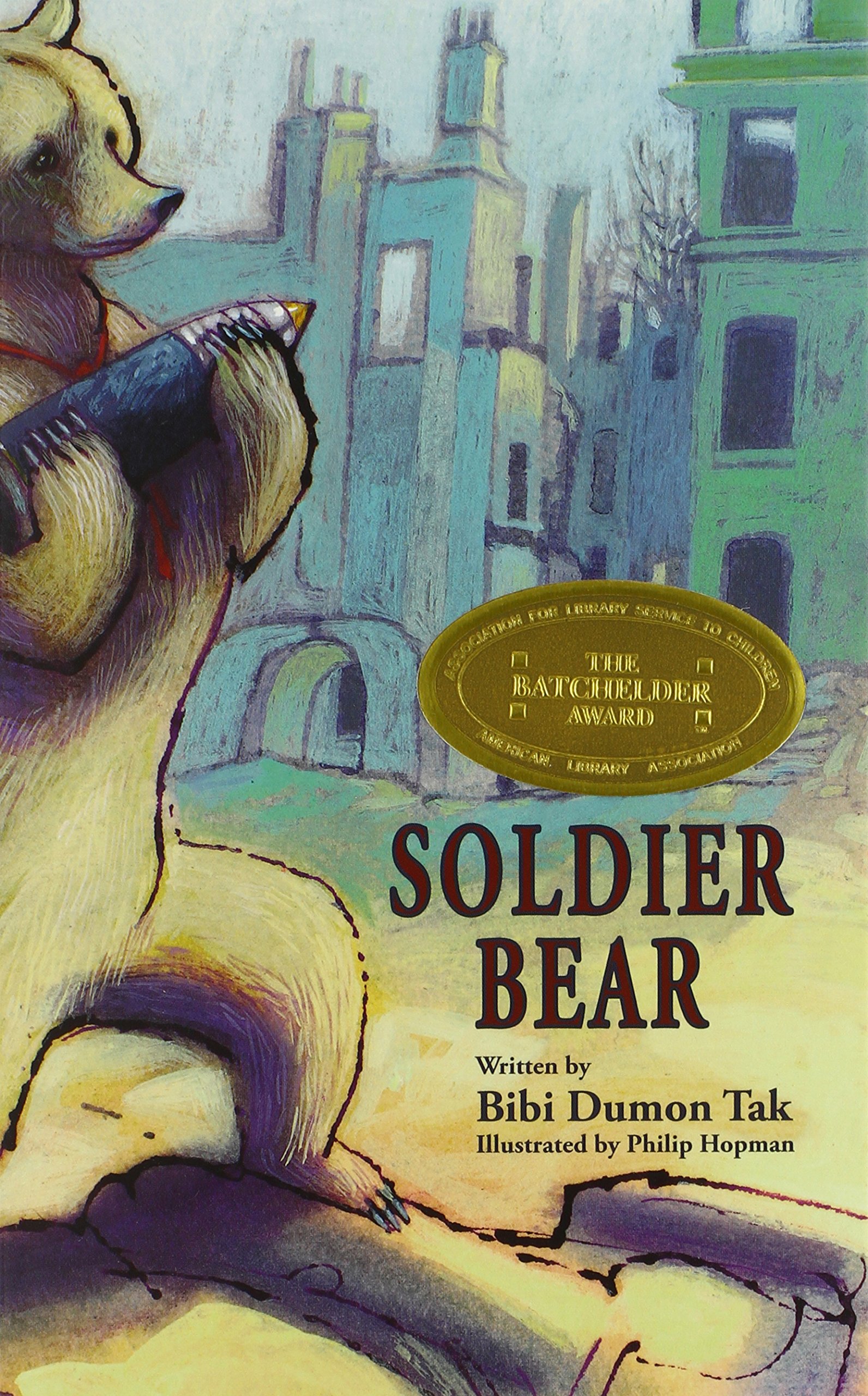
Tak, B. (2008). Soldier Bear. Amsterdam: Eerdmans Books for Young Readers.
Genre / Intended Reader: Historical Fiction; Grades 4-7
Thoughts: As noble, heroic (and even a little mischievous) as a human, Wojtek the bear is an orphan who becomes adopted by Polish soldiers stationed in Iran during World War II. A source of encouragement in the harsh realities of war, Wojtek is not only comforting, but assists the soldiers by carrying bombs, and even acting as a spy! Based real events, this book is not only intriguing, but a source of warmth and entertainment for all readers.
Craft: Using construction paper and yarn to create a necklace, students will design a medal decorated with an achievement written on it to give to Wojtek the bear in honor of his service and friendship.
Critique: While a wonderful story based on truth, Soldier Bear includes language that may be inappropriate to younger readers including the referencing of female undergarments, alcohol, and cigarettes. Overall, a fantastic and powerful story of an unlikely friend and hero.
Lesson Sketch: Students will write three diary entries of Wojtek’s perspective being involved in the war effort as a bear among humans using Google Blogs; 1 entry per day.
How was Wojtek the bear a source of comfort and joy to the Polish soldiers in Iran?Is it possible to be happy during times of war? Could the soldiers have taken better care of Wojtek; how?
CCSS.ELA-LITERACY.RI.5.6
Analyze multiple accounts of the same event or topic, noting important similarities and differences in the point of view they represent.
Resources:
Animal Service to the Military
The Giver
Lois Lowry

Lowry, L. (1993). The Giver. New York: Laurel Leaf Books.
Genre / Intended Reader: Science fiction, young adult fiction; Grades 6-12
Thoughts: In an attempt to create a Utopian world,
Craft: Design a Utopian world. Draw out the blueprints and the completed projects with coloring, labeling features, and other necessary elements to the society.
Critique: Due to mild sexual content and portrayal of infanticide, Lowry’s young adult book is not appropriate for younger children, but does address sexual curiosity and puberty in an innocent manner that is relevant to the plot. The graphic descriptions give deep insight to teenage audiences and challenge them to consider dynamic social issues. A phenomenal message, The Giver will show all readers that human diversity, though people will never be perfect, should be embraced and celebrated.
Lesson Sketch: Students will make a list of assigned jobs given at the age twelve ceremony and, using Canva.com, will create a hiring advertisement for one of the jobs including a description, desired skills, and persuasion in 45 minutes.
If you could remove any negative emotion from life, what would it be and why? What are the negative repercussions of this removal? Are the advantages of sameness and controlled environment worth the losses; why?
CCSS.ELA-LITERACY.W.7.6
Use technology, including the Internet, to produce and publish writing and link to and cite sources as well as to interact and collaborate with others, including linking to and citing sources.
Resources:
https://www.youtube.com/watch?v=FeLYOUmsjRo
The Absolutely True Diary
of A Part-Time Indian
Sherman Alexie
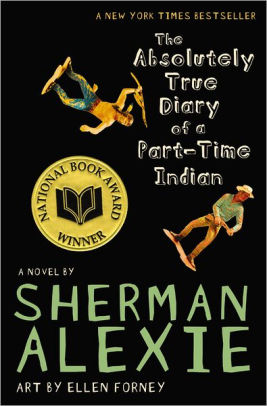
Alexie, S. (2007). The Absolutely True Diary of A part Time Indian. New York:Little Brown.
Genre / Intended Reader: Young adult fiction; Grades 9-12
Thoughts: An authentic book, this diary is written in the perspective a high school boy, Junior, who has his fair share of life burdens: brain damage, alcoholic parents, bullied severely. Living on an Indian Reservation, he aspires to become an artist, but realizes that no one ever succeeds and leaves the “rez.” TO achieve a successful life and reach his dreams, Junior makes the ultimate betrayal to his people: leaving the reservation to attend a white school.
Craft: Junior loved to sketch and doodle, hoping to become an artist someday. Create a comic book representation of the book, using only ten slides.
Critique: This book is intended to be a diary, so it features sincere writing. Exposing Junior’s thoughts of masturbation, fowl language, and anger, the reader gets complete access to his mind and emotions. Readers can make a true connection with Junior’s genuine character and be inspired to try to obtain a bright future no matter how much people try get in the way.
Lesson Sketch: Students will defend their opinion and analysis of the book by writing a review and whether or not it should be recommended to read in two attempts (rough draft and final draft).
(three discussion questions)
CCSS.ELA-LITERACY.W.9-10.9
Draw evidence from literary or informational texts to support analysis, reflection, and research.
Resources:
https://www.youtube.com/watch?v=ZGyurgKEyFA&list=PLtUh6fdfnA7LcrEO8dfQU6az5_SFVR_gd
The Arrival
Shaun Tan

Tan, Shaun. (2006). The Arrival. Australia: Hodder Children’s Books.
Genre / Intended Reader: Graphic novel; Grades 5-12
Thoughts: Shaun Tan’s visual masterpiece, The Arrival, uses only stunning graphics to paint the vivid picture of an immigrant’s perilous journey to a new land in search of a better life for his family. Facing fear, isolation, and difficulty with employment and settling in, the protagonist represents the hard journey of millions who leave everything behind to capture a dream. With the help and wonderful friendships of fellow foreigners and citizens, the protagonist works hard to achieve a comfortable and humble new life and eventually bring his family over to share in the beauty of a fresh, new world.
Craft: Design a Model of a new creature using craft materials paper, glue, beads, markers, craft fur and feathers, tape, construction paper and other classroom items. Give the animal a name and describe the traits.
Critique: To depict an authentic immigration experience, Tan incorporates strange and exotic images. His use of odd little creatures and interestingly fascinating architecture, draw the genuine overwhelming feelings of awe and confusion a foreigner may truly experience in a new world. The imagery is highly metaphorical, but represents the overall journey of life’s departures and finding home. The people Tan depicts in his wordless literary gem serve a purpose of providing warmth and hospitality. They are long awaited land in the midst of a storm for the protagonist and others to follow his same difficult path to greater things. He uses gray tones and sepia tones to create the look of an antique photo album. The illustrations are absolutely breathtaking and the story, though quite literally depicting the journey of an immigrant, still lends itself to far more themes applicable to all those who have not necessarily experienced alienation in a new land.
Lesson Sketch: Students will create a comic strip style graphic story on Google Drawing using 10 slides maximum, share these creations with a partner to see if they can “read” each others’ stories and discuss different interpretations before explaining their own thoughts to one another.
How are words and pictures different and alike in the ways that they tell a story? Do you think words or pictures or more effective a communicating a story; Why? What is the most powerful message of Shaun Tan’s The Arrival; Why?
CCSS.ELA-LITERACY.RL.5.7
Analyze how visual and multimedia elements contribute to the meaning, tone, or beauty of a text (e.g., graphic novel, multimedia presentation of fiction, folktale, myth, poem).
Resources:
Discussion Questions and Guided Reading
Cathedral: The Story of It’s Construction
David Macaulay
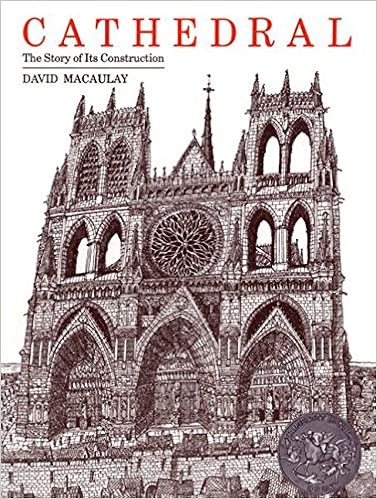
Macaulay, D. (1973). Cathedral: The Story of It’s Construction. New York: Houghton
Mifflin Harcourt Books For Young Readers.
Genre / Intended Reader: Historical Fiction; Grades 6-8
Thoughts: Construction and Engineering. Religious power and influence. Wealth and poverty. The great cathedral were built hundreds of years ago and still stand today. Their stories of creation stand with them. Men who knew they would never see the finished product gave all of their time, talent, and treasure to complete this masterpiece buildings. For God? For Glory? For status? Different people held different motivations but all resulted in the grand design of the cathedrals.
Craft: Using Popsicle sticks, cotton swabs, tooth picks, glue, tape, and marshmallows, build a sturdy cathedral structure model and document the techniques of building that are most efficient and what designs do not work.
Critique: Macaulay gives great detail and background behind not just the creation, but the planning, motivation, hardships, socio-economic perspectives, and grand design of the magnificent cathedral.
Lesson Sketch: Citing evidence from the text, students will write a 1 age paper about why people were so dedicated to building the cathedral despite the risks and challenges, then create a persuasive and enticing recruitment ad for a specific position to join the cathedral building community.
How did the great cathedral reflect Christian salvation? What are 5 reasons the people of France wanted to build a magnificent cathedral? Why did the details of its construction require masters of architectural craft, math, and engineering?
CCSS.ELA-LITERACY.RL.6.1
Cite textual evidence to support analysis of what the text says explicitly as well as inferences drawn from the text.
Resources:
A Wrinkle In Time
Madeleine L’engle
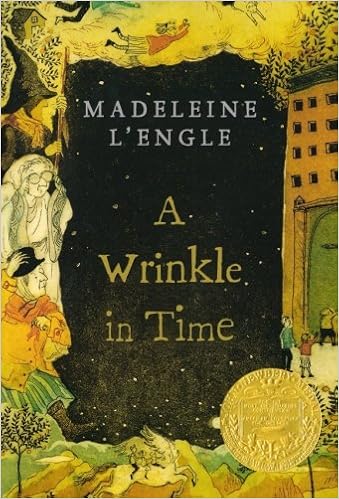
L’engle, M. (1962). A Wrinkle In Time. London: Penguin Books.
Genre / Intended Reader: Science fiction, Fantasy; Grades 5-8
Thoughts: The Murry’s are no ordinary family. Awkward ingeniousness, missing people, and time travel, the Murry’s have a reputation of strangeness. When an unlikely visitor shows up to their house one dark and stormy night, everything changes for young Meg as she travels through space and time, never to be the same again. This book explores possibilities that the world knows not of yet.
Craft: Students will paint their favorite scene of the story as they imagine it to look on a canvas board and write a quote from the story somewhere in the canvas.
Critique: L’Engle has tackled several big concepts in her adventurous science fiction journey ranging from bullying and abandonment to futuristic medicine and intergalactic travel. While giving tremendous detail and an engaging story, the author neglects some explaining on certain events. This does, however, allow readers to use their imagination and fill in their own thoughts.
Lesson Sketch: Mrs. Whatsit compares life to a sonnet. Using the poetic form of a sonnet, write a story about your life. How does this writing form impact its meaning?
How did author’s religious roots effect her writing? What are kind words or actions that may help Meg through her time of struggling with the loss of her father?
CCSS.ELA-LITERACY.RL.7.5
Analyze how a drama’s or poem’s form or structure (e.g., soliloquy, sonnet) contributes to its meaning
Resources:
The Journey Begins
Thanks for joining me!
Good company in a journey makes the way seem shorter. — Izaak Walton

 Children's Literature Blog